
Could You Identify These 6 Highly Venomous Snakes While Bugging Out?
[cmamad id=”3086″ align=”center” tabid=”ad-off” mobid=”3104″ stg=””]
Most venomous snakes are active during the night, but the prarie rattlesnake is an axception and you’re quite likely to encounter one during the day. Similar to the massasauga rattler, but the difference is its scales. Look for paired plates on the massasauga’s head and small scales on the prairie rattlesnake’s head to tell them apart.
6) Prairie Rattlesnake
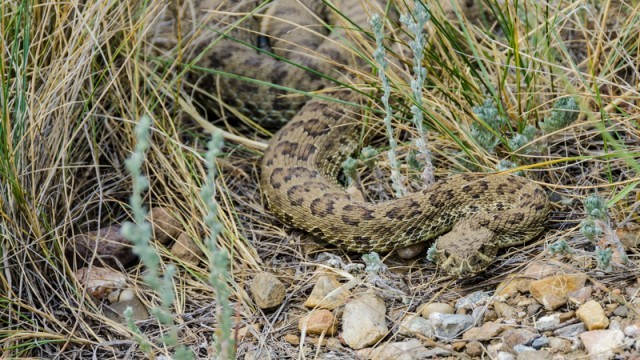
PRAIRIE RATTLESNAKE (Crotalus viridis). Length 3-4 feet. The habit of denning in large groups is well-known. Several hundred have been found in hibernation in a single den. The food of the prairie rattler is warm-blooded, mostly rodents and small rabbits. It appears to be active in the daytime, whereas the other poisonous snakes are mainly nocturnal. The ground color varies from a light gray to green, and the pattern of dorsal blotches with alternating rows of lateral blotches may cause it to be confused with the smaller massasauga, but the scales on top of the head are all small on the prairie rattler, whereas paired plates are present on the massasauga.
This snake has a wide range over western United States, where it is probably the most common rattlesnake. It is frequently found in prairie dog villages. The burrows of these animals are utilized as shelter and the young are used as food items.
Remember to check to your own State’s wildlife department for any potential snake dangers in areas you’re likely to be hiking in. There’s no need to get paranoid about these beautiful creatures, but it pays to take sensible precautions all the same.
Please SHARE this with your family and friends – thanks
