
Could You Identify These 6 Highly Venomous Snakes While Bugging Out?
[cmamad id=”3086″ align=”center” tabid=”ad-off” mobid=”3104″ stg=””]
Timber rattlesnakes love hanging out near homes and crossing roads. So if you spot a snake near your house then be careful, because it could be one of these!
They’re also often found in overhanging rocks, so if you’re hiking in mountainous areas then keep a sharp lookout.
5) Timber Rattlesnake
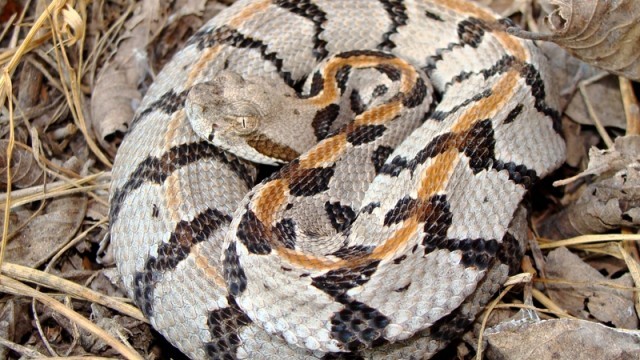
TIMBER RATTLESNAKE (Crotalus horridus). Length 3-4 feet, occasionally longer. The timber rattler occurs only in eastern Kansas and is only locally common, at scattered localities. It prefers the deciduous forest where Iimestone rock cutcrops as ledges, but may wander into cultivated fields and open areas during late spnng and summer. The food consists primarily of small rodents and young rabbits. Ordinarily, it is a mild-mannered snake, one which will seek to escape direct contact with man, but its size and habit of living close to human habitations necessitate considering this rattler dangerous. Ground color may vary from a light gray to yellow, with the black chevron-shaped blotches of the back uniting with lateral blotches to form crossbands. Another common name for the timber rattler is banded rattlesnake. Some individuals may be almost all black. The tail is characteristically velvet black in adults; banded in young.
During the spring and summer the timber rattler is quite often encountered crossing roads, where its large size and slow movement often make it a victim of modern transportation.
The timber rattler has a habit of frequently spending daylight time just beneath the edge of overhanging rocks. A hiker should always look beneath any rocks of this sort before using the rock as a resting place.
The last snake over the next page is another type of rattlesnake, but this one is unique in that it’s commonly active during the daytime.
