
Could You Identify These 6 Highly Venomous Snakes While Bugging Out?
[cmamad id=”3086″ align=”center” tabid=”ad-off” mobid=”3104″ stg=””]
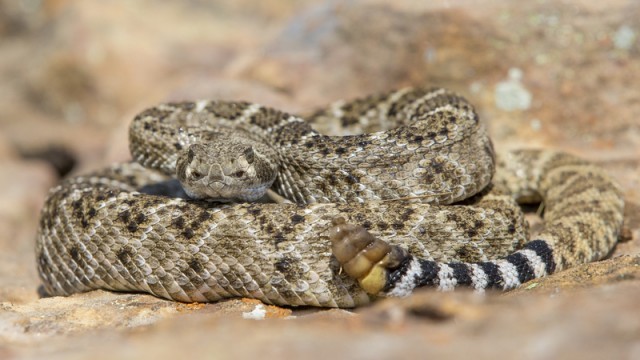
The western diamond-backed rattlesnake is larger than the previous species, so it’s easier to spot, but should still be treated with great caution.
Western Diamond-Backed Rattlesnake
WESTERN DIAMOND-BACKED RATTLESNAKE (Crotalus atrox). Length 4-5 feet, although some are larger. In the United States, probably more deaths are caused by this snake than by any other. A combination of large size, wide distribution, abundance, and touchy temperament give this distinction to this snake. It is rather common in Oklahoma, just south of this region. The diamond-back prefers dry open plains and canyons, where it feeds upon small rodents, young rabbits, and occasionally, birds. The ground color varies somewhat from buff to gray; the snake generally has a faded appearance. The black and white tail bands are distinctive.
About ten young are born in late summer or early fall. Larger litters have been recorded. The young are fully capable of inflicting a dangerous bite as soon as they are born – and quite willing to do so!
The snake over the next page is commonly found near human habitation. So you could encounter it around your campground, or your own home!
