
4 Uses For Wild Fungi And I Bet You Hadn’t Thought Of At Least 2 Of Them!
[cmamad id=”3086″ align=”center” tabid=”ad-off” mobid=”3104″ stg=””]
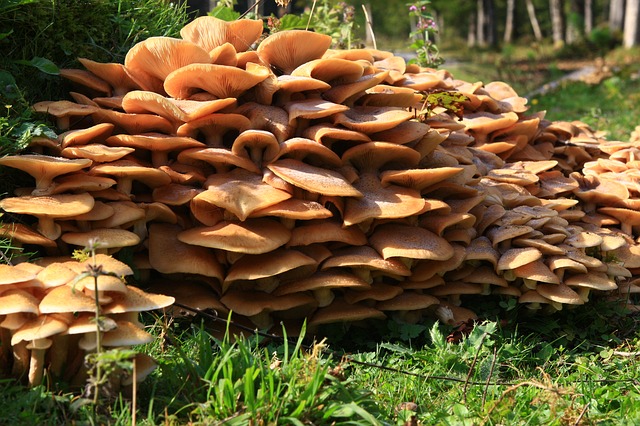
When most people think about wild fungi they immediately think of food – but they almost certainly won’t think of three other uses for them…
Edible Mushrooms
Mushrooms are sometimes abundant and are very important survival foods. It is an interesting thing that mycologists consider cultures to generally be either mycophobic or mycophilic – mushroom fearing or mushroom loving. Some cultures favor mushrooms that most others avoid. I have often wondered if this and the deep appreciation some cultures have for mushrooms is due to ancestors being repeatedly saved from famine by mushrooms, which has certainly happened throughout the ages.
The all too well known problem with mushrooms as edibles is that some are deadly. Coupled with the fact that mushrooms in general are difficult to identify, eating mushrooms can clearly be risky. Do your research before starving to death so that you can be certain to take the time to seek out knowledgeable people as well as good books. There are many excellent mushroom websites.
Mushrooms can be dried. Though, it is a funny trick of nature that they tend to grow when there is more humidity and can be difficult to dry. Those in the Rocky Mountains will have a much easier time of it than I do down in the Delaware River Valley between New York and Pennsylvania. For off-grid sites, consider a solar dehydrator, such as passive solar using glass to trap heat. For sites with electricity consider one of the many commercially manufactured dehydrators, or make one with a simple heating unit such as a light bulb.
Medicinal Mushrooms
The medicinal properties of mushrooms have been getting increased attention lately, though they were well-known before the modern world. Many of the medicinal uses of mushrooms pertain to first-aid care, so this subject is well worth learning for the survivalist. If the notion of medicinal mushrooms seems strange, consider that out first antibiotic drug, penicillin, is fungal.
Indeed, primary traits among the medicinal mushrooms are antimicrobial and immune-boosting properties. Polypores in particular, like Turkey Tail (Trametes versicolor) and Agarikon (Fomitopsis officinalis), are known for benefiting immunity and fighting off pathogens. They are used for lung ailments, respiratory infections, systemic infections, cancer, and even auto-immune diseases.
Many medicinals are also good food. Maitake (Grifola frondosa) is another name that seems to reflect a long-found reverence. In Japanese it means “Dancing Mushroom”, which some say is because it was worth so much (so revered were such medicinal mushrooms) in ancient Japan that you would dance for joy upon finding one. Or, perhaps if you were suffering from a life threatening illness that Maitake was known to cure you would have even more reason to dance. Locally, Grifola is one of the most commonly picked mushrooms, known as Sheep’s Head or Ram’s Head – largely an Appalachian name. American field guides and grocery stores (this one is also cultivated) usually call it Hen-of-the-Woods. It is so abundant in certain Oak forests that people will often eat more than their fill and still have plenty to dry, can, or freeze.
Mushrooms even have antifungal properties. If this seems strange, consider that you are protected by pathogens by your skin. Fungus has no such barrier, but must still protect itself against pathogens… including fungus!
Many mushrooms, especially certain Polypores and the Luminescent Panellus (Panellus stipticus) can be used to stop bleeding. The species name stipticus is from styptic, meaning that it is used to stop bleeding. And yes, the common name is because it glows in the dark- at least the North American variety.
Fire-Starting with Fungus
Mushrooms can be very good for “catching the spark” when starting fire with flint or maintaining the ember when starting with the bow drill and the like. A nice dry piece of Polypore can be used in the middle of your tinder bundle. Species with a felting interior, like the Tinder Polypore, can be fluffed into very nice tinder by scraping them with your knife to tease the fibers into fluff.
Transferring a “coal” from bow or hand drill methods is simply done by contacting the mushroom with the ember so that it keeps lit. Polypores are like punk, meaning that they stay lit easy. Punky wood (dry and rotten) might very well stay lit for hours from only a spark or ember, but generally wood requires sufficient heat to keep burning or it goes out. Polypores can stay lit for many hours, often slowly burning from just a small ember until all the mushroom is burned up.
Mushrooms don’t have the tendency to burst into flame, even though they stay lit well. In order to produce flame, hot pitch can be poured on the Polypore and then lit to produce a torch.
Taking Care of Tools with Polypores
Pieces of dried Polypores can work great for storing fish hooks. I like to slice the fresh mushroom into thick strips before drying them. This makes them handy for decocting into medicine, for stashing in tinder boxes, and for piercing a selection of fish hooks into in attempt to keep a tackle box orderly.
It also makes them ready for making charcoal if, for instance, they are cut so that they fit into an Altoids box or some other vessel that can be used to make charcoal. Have a line-up of fish hooks in a small rectangle of Polypore makes it easy to grab a few hooks to throw in your pocket or in your sack. If it keeps dry, you’ll even have fire-starting material with you. If it gets wet, just toss it – you have plenty more stashed away.
For more great survival tips and tricks, please visit Survival Cache.
I hope you found that interesting. Be honest, how many of those uses did you already know about? Now you can look at our native fungi in a wholly different way
[cmamad id=”3086″ align=”center” tabid=”ad-off” mobid=”3104″ stg=””]
Please SHARE this with your family and friends – thanks
