
The Mighty Oak Tree Is The Ultimate Survival Resource – Here’s Why
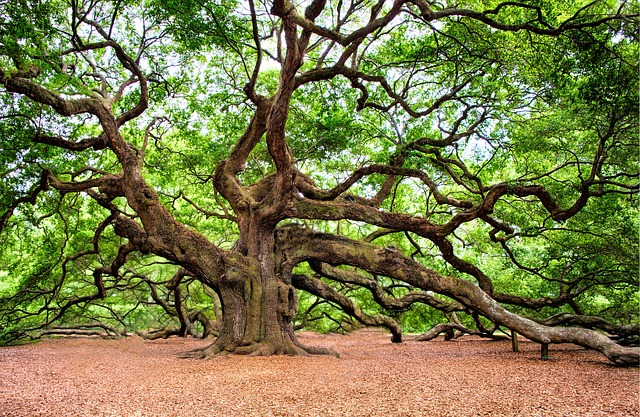
The mighty oak tree is not only magnificent to look at, it’s also am amazing survival resource…
[cmamad id=”3086″ align=”center” tabid=”ad-off” mobid=”3104″ stg=””]
Acorns as Survival Food
Although many animals eat acorns as they find them, a good number of the Oaks produce acorns too bitter and astringent for humans to eat without leaching. The most efficient way to leach acorns if you are home or at a long-term camp is with cold water. You’ll want to cook them (if possible) eventually, but you can save on fuel by doing the bulk of the leaching with cold water.
If you want to or need to speed up the leaching of acorns, you can do so by applying heat. Just as with cold water leaching, when the water turns dark you should dump it and add clean water. You might find it best to heat up a large vessel of water so that after you dump the tannin-rich water you can add hot water.
Mushrooms that Grow with Oak
Besides the acorns as a potential staple food or nutritional side dish, Oak forests prove hospitable because of the large selection of edible mushrooms that grow with Oaks. (Of course, the warning stands that there are non-edible and fatally poisonous mushrooms that grow with them as well.)
There are basically three different kinds of mushrooms: decomposers, parasites, and symbionts. The subject is complicated by the various forms within these three categories and in that many mushrooms belong to more than one of the three. Nonetheless, these basic groups are important to learning mushroom identification.
Edible species of mushrooms associated with Oak include all three of these types of mushrooms. Two of the most abundant and well-known edible species are common in the autumn on Oaks – Maitake (Grifola frondosa, Hen-of-the-Woods, Sheep’s Head, etc.) and Honey Mushrooms (Armillaria spp.). Chicken-of-the-Woods (Laetiporus spp.) is another abundant and delicious Oak parasite.
These three mushrooms (two of them are identified only by genus above because there are groups of closely related species known by the same name) are prolific enough to provide surprisingly large amounts of food. Indeed, many mushroom hunters content themselves with only one of the three as a foraged ingredient for the table. But they also miss out on many of the other fungal offerings under Oak.
Mycorrhizal (symbiotic) species include delicious edibles like Boletes, Chantarelles, and Milk Mushrooms (Lactarius spp.). Chantarelles (Cantharellus spp.) are pretty well known and pretty easy to identify. Also, closely related is the Black Trumpet (Craterellus spp.).
Boletes (Boletus spp. and other related genera) are perhaps more difficult to identify than Chanterelles. Although there are many species of Chanterelle, there are a few obvious species that stand out.
The Boletes, however, are a very large group. Although it is not really true, some people consider all Boletes to be edible (at least those without a strong bitter or spicy flavor). Certainly, some are very prized. Lactarius is a group with many non-edible and poisonous species, and many people avoid them.
However, there are some delicious species that grow with Oak, like the Voluminous Milky (L. volemus).
Oak as Fuel
Though there is significant variety among the many species of Oak, it is generally a superior firewood. It is dense and hard and has a high heating rating. It does burn a little slow, which is one of its benefits, but it also doesn’t put out light as well as some other choices of wood (Hickory, for example, is also very hard but burns bright. Lighter woods that burn quick will often put out more light.).
So I hope that like me, you now look at the oak tree in a whole new way! For more helpful survival tips and facts, please visit Survival Cache.
Please SHARE this with your family and friends – thanks
